

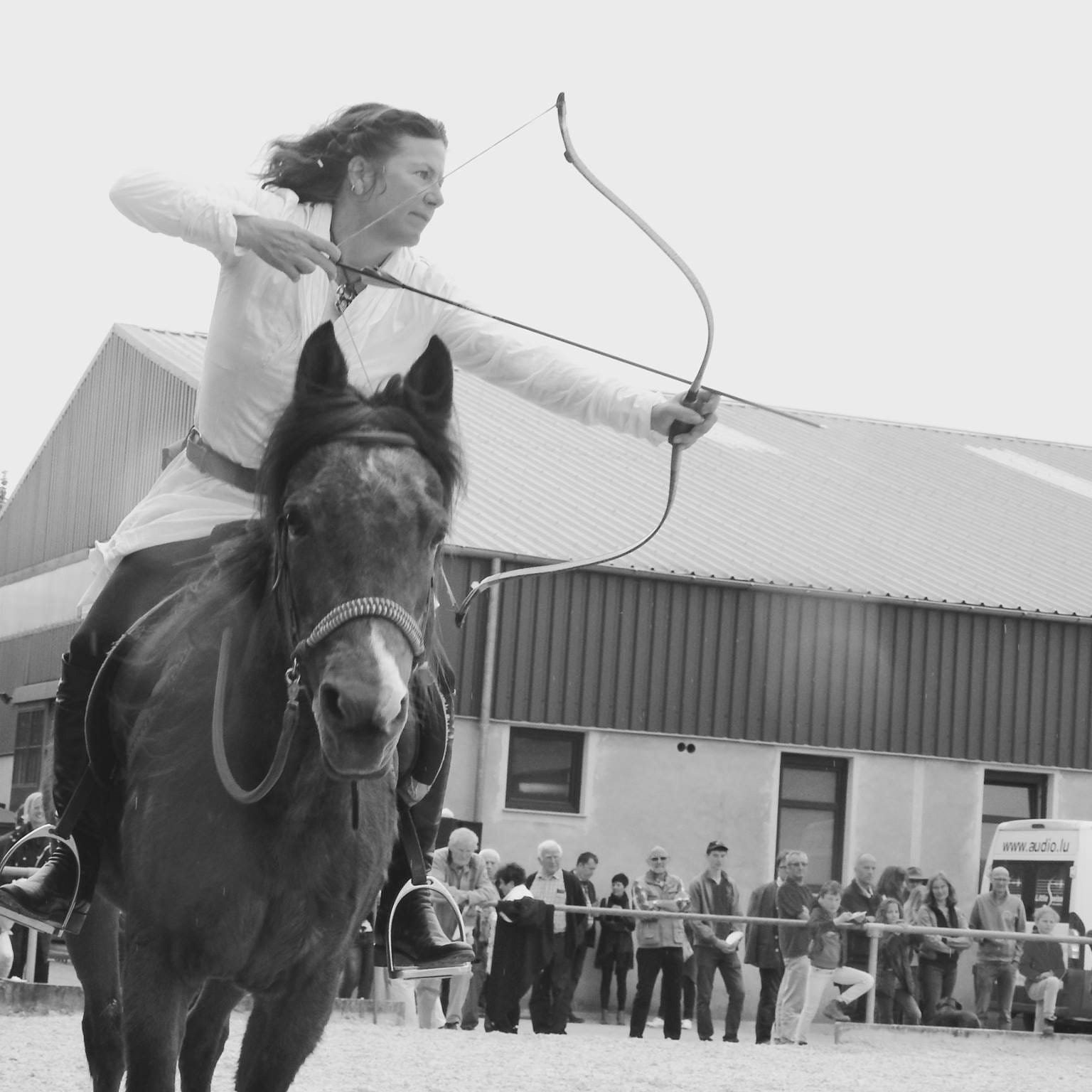
At fifty I found myself standing on an archery field for the first time, surrounded by people who seemed impossibly young, athletic and confident, and although I was keenly aware that I was the oldest person there by a comfortable margin, what surprised me was not the awkwardness of being a beginner at an age when most people are expected to know exactly what they are doing, but the strange sense of excitement that accompanied it, as though some forgotten part of myself had quietly awakened and was curious to see where this unexpected path might lead.
I remember looking around that first training field and noticing that I was older than everyone else. There is a particular discomfort in becoming a beginner later in life, especially as a woman, because by then we have spent decades cultivating competence. We know how to navigate careers, relationships, households and responsibilities. We have become the reliable ones, the women who know how things are done, and there is a certain vulnerability in willingly placing oneself in a situation where one is clumsy, inexperienced and entirely unsure of what comes next.
Yet there was something about the bow that drew me in. It was not the target, nor was it any desire to compete. What captivated me was the quality of attention that archery demanded. The moment I raised the bow and drew the string, the endless background noise of life seemed to fall silent. Concerns that had occupied my mind only moments before dissolved into irrelevance, because the bow has very little interest in your stories, worries or plans. It asks only that you become fully present, and in a world where so much of our attention is scattered in a hundred different directions, that simple requirement felt almost revolutionary.
A year later I learned horseback archery, which still makes me smile when I think about it because there is something delightfully absurd about a woman in her early fifties deciding that what she really needs in her life is to learn how to shoot a bow from the back of a moving horse. Looking back, I suspect that absurdity was precisely the point. Somewhere along the way I had stopped asking whether something was age appropriate and had begun asking whether it made me feel alive, and those two questions rarely produce the same answer. My first go on a horse was basically start to end of the track without an arrow shot. I simply didn’t have time! Wearing my little white dress riding that big white horse, vaguely waving my bow around, I probably looked like a run-away fairy - albeit rather old.
As the years unfolded, competitions became part of my life, followed by demonstrations, performances and eventually a travelling show. There were seasons when I slept in my car more often than in my own bed and mornings when I woke beneath an open sky with horses grazing nearby and a full day of work already waiting. Life revolved around training, caring for ponies, setting up arenas, sewing costumes, loading equipment, driving trucks and performing, and although it was physically demanding in ways that many people would probably consider unsuitable for a woman of my age, I found myself growing stronger with every passing year.
What I remember most vividly from those years is not any particular title, competition or achievement, but the texture of the life itself. Especially the deep, honest and generous friendship of the sport; the smell of horses warming in the morning sun, coffee shared beside trailers before a competition began. Long journeys across Europe with bows, arrows, costumes and ponies packed into every available space. Even now, some of my happiest memories involve standing ankle-deep in mud wondering how exactly we were going to build an arena before the audience arrived, only to watch everything somehow come together through a mixture of determination, ingenuity and what can only be described as organised chaos.
The travelling shows developed their own rhythm. Days began early and ended late, and somewhere in between there were horses to care for, equipment to unload, costumes to repair, targets to prepare and performances to deliver. People saw the finished result; the horse galloping, the arrow flying, the illusion of effortless skill. They rarely saw the hours of preparation behind it, or the women driving trucks, hauling equipment and stitching costumes late into the evening before doing it all again the next day.
What struck me repeatedly during this period was the absence of women like myself. There were always men. Most were younger than me, and nobody seemed particularly surprised to find them pursuing difficult and adventurous things. Yet women of my age were conspicuously absent, as though somewhere along the line they had been quietly persuaded that exploration, mastery and physical challenge belonged to the first half of life rather than the second.
The irony, of course, is that the second half of life is precisely when many women are finally equipped for such adventures. We arrive carrying decades of experience, resilience and self-knowledge. We have survived enough failures to know that failure is rarely fatal. We have weathered enough storms to understand that discomfort is temporary. We have learned, often through necessity, how to adapt, persevere and begin again.
By the time I became the national archery coach for Luxembourg and later qualified as an international horseback archery judge, travelling to competitions throughout Europe and beyond, I had accumulated thousands of hours of experience that could never have been acquired from books. The knowledge lived in my body. It lived in the countless arrows shot, the horses ridden, the mistakes made and corrected, the competitions judged and the students coached.
Perhaps that is why I enjoy coaching women so much.
Most of the women who find their way to my arena today are over fifty, and although each arrives with her own story, there are certain patterns that appear often enough to be familiar. Many have spent years caring for others, managing responsibilities and carrying burdens that are largely invisible to the outside world. Some arrive exhausted. Some arrive with bodies that no longer seem to behave in quite the way they once did. Some arrive carrying the quiet disappointment of having placed their own desires at the very bottom of the list for so long that they have almost forgotten what they are.
They come to learn archery - they think…
What fascinates me is how often the real work begins long before an arrow reaches the target.
One of the first things beginners discover is that the bow has very little interest in force. A woman will stand determined to master the shot through sheer effort, recruiting every available muscle in the process, and the resulting arrow will often demonstrate quite clearly that determination and harmony are not necessarily the same thing. Years of competence, responsibility and perseverance have taught many of us how to push through obstacles, yet intuitive archery introduces an entirely different conversation, one that revolves around timing, awareness, breathing and trust in the body’s ability to organise itself when given the opportunity.
Over the years I have watched hundreds of women pass through this process, and there is a particular moment that never ceases to delight me. After a period of effort, concentration and occasional frustration, something shifts. The breathing settles. The shoulders soften. The movement becomes fluid rather than managed. The arrow leaves the bow with an ease that had seemed impossible only moments before, and my attention is on the woman standing beside me, because what appears on her face in that moment is something I have witnessed hundreds of times over the years and yet never tire of seeing; a fleeting mixture of surprise, relief and recognition, as though she has unexpectedly reconnected with a part of herself that had been waiting patiently beneath decades of responsibility, noise and habit, and has suddenly remembered something she knew all along but had somehow forgotten.
Those moments have taught me more about post-menopause than any book ever could.
The popular narrative surrounding this stage of life is so relentlessly focused on decline that it often overlooks the extraordinary opportunities hidden within it. What I have witnessed, both in myself and in the women I coach, is not a diminishing but a reorganisation. The body changes, certainly, and any woman who has travelled this road knows that. Yet alongside those changes comes an invitation to inhabit ourselves differently, to pay attention in ways we may never have done before, and to develop a relationship with our bodies that is based less on control and more on collaboration.
Intuitive archery seems uniquely suited to this stage of life because it cannot be bullied. The arrow flies well when body, breath and awareness are working together, and that quality of cooperation feels increasingly familiar to me the older I become. Somewhere between menopause, horses and bows, I gradually stopped trying to dominate life and became more interested in participating in it. The difference is subtle, yet profound.
Looking back now, I realise that I did not become an archer despite turning fifty. I became an archer because I turned fifty. The woman who arrived nervously at that first bootcamp could not possibly have imagined the roads that lay ahead of her, nor the horses, competitions, friendships, campfires, muddy fields, early mornings and extraordinary women she would meet along the way. She certainly could not have imagined that one day other women would stand in her arena and assume she had been doing this all her life.
The truth is far more interesting.
I became this woman after fifty.
And somewhere between the first arrow and the thousands that followed, I became her.