

One of the things I have never understood is why menopause comes as such a shock to us women. We know it is coming, we know that one day our menstruation will begin and one day it will end. We have watched our mothers go through it, our grandmothers before them and countless women around us move through the same transition, yet when we finally arrive there ourselves it often feels as though we have crossed into unfamiliar territory without a map, because by turning menopause into a medical condition; the knowledge of it as a rite of passage was buried.
I remember asking myself that question years ago, long before I had an answer. Why were intelligent, capable women arriving at this stage of life feeling frightened, confused and convinced that something had gone terribly wrong? After working with women for more than three decades, and after walking this path myself, I no longer believe that the shock comes from menopause. I think it comes from finally seeing the weight we have been carrying all our lives, the denial of our worth as women.
We spend our lives adapting.
As little girls we begin absorbing ideas about what it means to be a woman without ever realising that this is what we are doing. We learn by watching, by listening and by paying attention to what is rewarded and what is criticised. We notice which women are admired and which are dismissed, and before we are old enough to question any of it we have already started adjusting ourselves to fit into expectations that seem to change every time we think we have understood them.
Looking back, I don’t think most of us ever understood whether those expectations made sense. We simply assumed that if we were struggling, if we felt overwhelmed or if we could never quite become the woman we thought we were supposed to be, then the fault must lie with us.
That belief follows us into adulthood.
We become very good at carrying things. We carry children, relationships, ageing parents, work, households, responsibilities and other people’s emotions, and because women have always been remarkably capable we simply keep stretching to accommodate whatever life asks of us next. After a while we stop noticing how much we are carrying because it has become the way we live.
I know that feeling well. There were years when I thought coping simply meant becoming stronger, more organised and more resilient. I prided myself on my strength and resilience, pat on the back, never ask for help… It never occurred to me that there might be another question worth asking. What if I wasn’t failing? What if I was simply trying to live inside expectations that no human being could sustain forever?
The freedoms women fought for changed our lives beyond recognition, and I would never wish to diminish how important they were. We gained opportunities our grandmothers never had, yet we stepped into systems that had already been designed around male biology, male rhythms and male ways of working. Rather than asking how those systems might also serve women, we became experts at fitting ourselves into them.
At the same time we lost something important that women had relied upon for thousands of years.
Women once lived in communities where knowledge, childcare, work and emotional support were shared. There was always another pair of hands, another woman who understood, another generation close by. Today many of us are expected to perform the work of an entire village on our own, and when we find ourselves exhausted we often interpret that exhaustion as weakness instead of recognising that we have been trying to do the impossible.
The body, however, keeps its own account.
It remembers every year we placed ourselves at the bottom of the list because someone else needed us more. It remembers the stress we accepted as normal, the grief we postponed because life left no room for it and the dreams we promised ourselves we would return to one day.
Then menopause arrives.
For a long time I believed the emotional upheaval women described came from hormones alone. I don’t believe that anymore. Hormones certainly play their part, but they also seem to open doors that have been firmly closed for years. Behind those doors are questions we have been too busy to ask and feelings we have been too occupied to acknowledge.
This, I believe, is where the grief lives.
It is the grief of discovering how much of ourselves we have given away without even noticing. The grief of believing that being a good woman meant always adapting, always coping and always putting ourselves somewhere further down the list. The grief of looking back and realising how often we questioned ourselves instead of questioning the expectations we were trying so desperately to live up to. The grief of overriding ourselves and the lack of self-love that fostered.
Perhaps this is why menopause feels so much bigger than the list of symptoms we usually hear about. It asks us to reconsider the lives we have built and the stories we have believed about ourselves. It asks us whether the woman we became was truly our own creation or whether she was shaped, piece by piece, by expectations we never consciously chose.
At the same time we find ourselves living in a culture that still struggles to know what to do with older women. We have spent decades surrounded by images that celebrate youth while treating ageing as something to resist. By the time we reach menopause we have absorbed those messages so completely that many of us approach this stage of life with fear long before we understand what it actually holds.
What I see in post-menopausal women is not decline but possibility.
I see women who have accumulated wisdom that cannot be learned from books. I see women who understand people because they have lived. I see women who are beginning to recognise the difference between the life they have maintained and the life they genuinely want to live. I see women becoming less interested in approval and far more interested in truth. I see leaders.
That is why I no longer see menopause as the end of something.
I see it as the point where we stop asking who we are supposed to be and begin asking who we have been all along. It is not always an easy conversation because it asks us to grieve the years we spent believing there was something wrong with us, but it is an honest conversation, and I have found that honesty has a remarkable way of returning us to ourselves.
Perhaps that is the real gift hidden inside menopause. It gives us permission to stop adapting long enough to discover that the woman we have been searching for has been with us all along, waiting for us to come home.
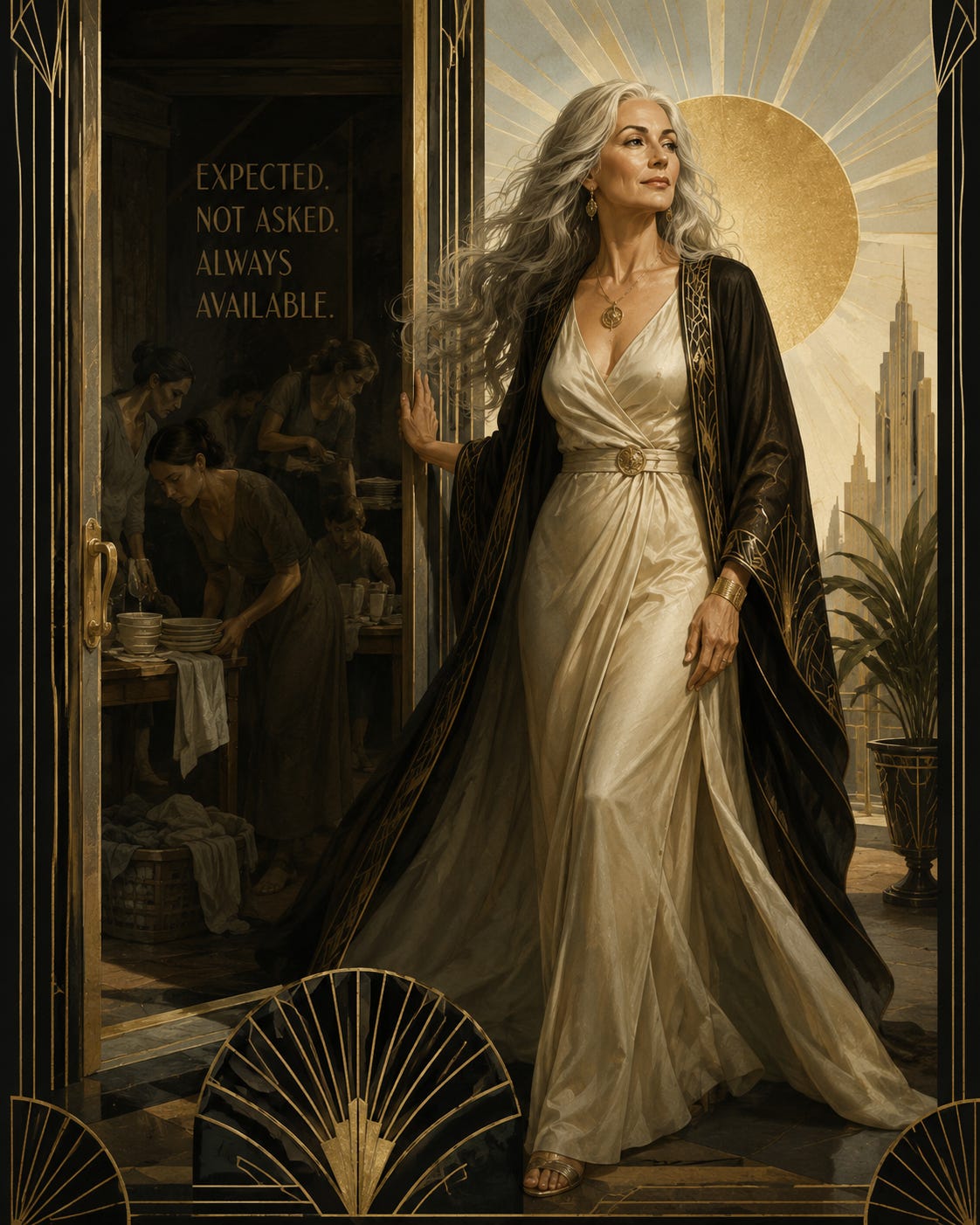
FINDING OUR INNER QUEENDOM